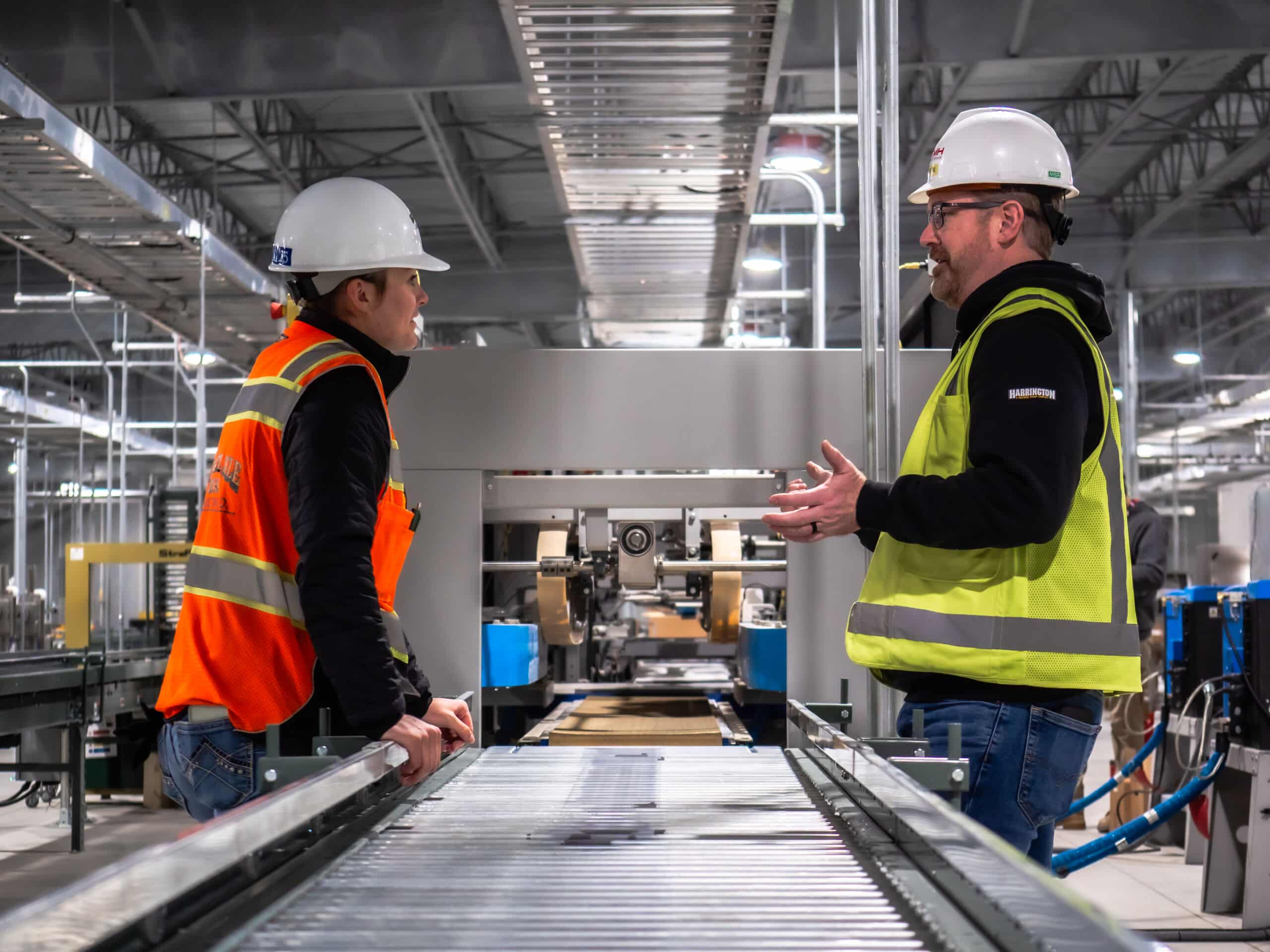
Today, Hytrol Conveyor Company, Inc. announced NBEZ, the first all-electric narrow belt accumulator in the industry.
‘The NBEZ is a belt-driven, zero-pressure accumulation conveyor designed for high-throughput, high-density, long-run zero-pressure accumulation. It is available in a variety of widths, lengths, and zone configuration, and it works seamlessly with Hytrol’s EZLogic® accumulation system.’
Ben Blaser, a sales engineer at RMH Systems summed up the impact that Hytrol’s NBEZ will have in the conveyor systems marketplace.
NBEZ Conveyor Provides a Quieter Work Environment
“The fact that the NBEZ does not require air to operate is a game changer, and allows for a much quieter work environment. Additionally, the beauty of the NBEZ is in the convince of the snap in installation and its ability to go 300 feet on a single drive.”
Watch the video below to see it in action:
Want to automate your company? Find out how RMH Systems can boost your efficiency with our warehouse conveyor systems.
Related Articles

When Cattle Inventory Is Tight and Labor Is Tighter: How to Gain a Competitive Edge with Automation
Key Takeaways Beef processors are facing mounting pressure from tight cattle supplies and persistent labor shortages. For small to mid-sized operations, automation doesn’t have to mean replacing workers or investing in massive new systems. [...]

Choosing the Right Automation Partner: 4 Questions Every Regional Beef Processor Should Ask
Key Takeaways Automation can give regional beef processors a real competitive edge—but only when it’s right-sized and backed by the right partner. This blog outlines the key questions regional processors should ask when evaluating [...]
Automation ROI for Regional Beef Processors: Where to Start and What to Expect
Key Takeaways Beef processors are under increasing pressure from labor shortages, rising wages, and higher expectations for quality and sustainability. As a result, automation is being reevaluated—not as a simple cost-reduction tool, but as [...]